
Cortex vs Mem0: Which Is Better for Production LLM Memory?
Cortex achieves 90.23% accuracy on LongMemEval-s benchmarks with superior temporal reasoning capabilities, while Mem0 delivers 91% lower latency and 90% token savings through aggressive compression. For production LLM memory, choose Cortex when accuracy and long-term recall matter most, or Mem0 when token costs and response speed are primary constraints.
Key Facts
Cortex scored 90.23% overall accuracy on LongMemEval-s, the highest reported score to date, with 90.97% on temporal reasoning
Mem0 reduces token usage by 90% compared to full-context methods while maintaining 66.9% accuracy on LoCoMo benchmarks
Commercial chat assistants experience a 30% accuracy drop when memorizing information across sustained interactions without proper memory layers
Cortex uses event-sourced architecture with three extraction layers for deterministic recall across months of interaction history
Mem0's open-source repository has over 47,680 GitHub stars and offers both cloud and self-hosted deployment options
Memory-augmented approaches can reduce token usage by over 90% while maintaining competitive accuracy across production workloads
Persistent memory is no longer optional for production-grade AI agents. Without it, every session starts from scratch, users repeat themselves, and agents lose the context that makes them useful. Cortex vs Mem0 represents the core architectural choice teams face when selecting a memory layer in 2026. This post compares both platforms across accuracy, latency, and cost so you can ship with confidence.
Why Production Memory Matters - and Why This Comparison Now
What is LLM memory? "LLM memory refers to mechanisms that enable models to retain, retrieve, and update information across prompts or sessions rather than treating each query as a blank slate." That capability transforms stateless chat into a system that learns, adapts, and personalizes.
The stakes are rising fast. The price for DRAM chips has jumped roughly 7x in the last year, making memory orchestration a direct lever on infrastructure spend. Meanwhile, benchmarks show that commercial chat assistants and long-context LLMs experience a 30% accuracy drop when memorizing information across sustained interactions.
For CTOs and engineers building AI agents, choosing the right memory layer now determines whether your system scales gracefully or breaks under real-world load.
What Criteria Actually Matter When Choosing a Memory Layer?
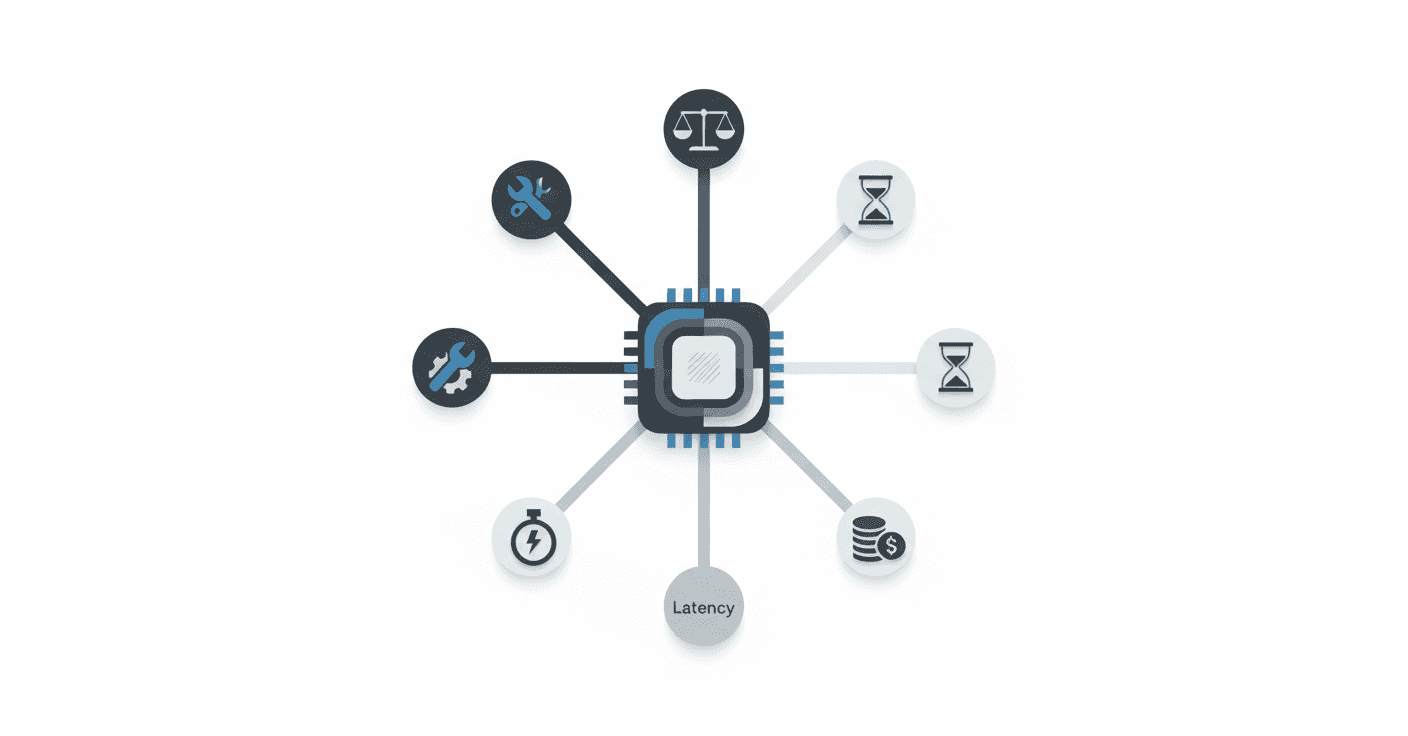
Not all benchmarks predict production behavior. The metrics that matter most include:
Accuracy on multi-session reasoning - Can the system connect facts across separate conversations?
Temporal reasoning - Does it handle knowledge updates and time-sensitive queries correctly?
Token efficiency - Memory-augmented approaches can reduce token usage by over 90% while maintaining competitive accuracy.
Latency - P95 response times determine whether your agent feels responsive or sluggish.
Developer control - SDKs, deployment models, and migration paths shape time-to-production.
Which Benchmarks Actually Predict Real-World Performance?
Two benchmarks dominate the conversation:
LongMemEval evaluates five core memory abilities: information extraction, multi-session reasoning, temporal reasoning, knowledge updates, and abstention. The standard LongMemEval_S configuration contains histories of approximately 115,000 tokens per instance, making it a rigorous test of long-horizon memory.
LoCoMo focuses on very long-term, persona-grounded dialogues. It provides multi-modal dialogues and diverse reasoning challenges such as temporal ordering and multi-hop inference.
Both benchmarks emphasize compact, information-rich evidence pools. Best results use fewer than 1,000 tokens for QA input from memory, far below full-history context. Systems that score well on these benchmarks tend to perform well in production scenarios where recall and latency both matter.
How Does Mem0 Work - and Where Does It Struggle?
Mem0 is a memory-centric architecture that dynamically extracts, consolidates, and retrieves salient information from conversations. The platform has gained significant traction: its GitHub repository has over 47,680 stars, and the open-source project is licensed under Apache 2.0.
Mem0's pipeline consists of two phases: Extraction and Update. This ensures only the most relevant facts are stored and retrieved, minimizing tokens and latency. An enhanced variant, Mem0ᵍ, stores memories as a directed, labeled graph to capture richer, multi-session relationships.
Is Mem0 Really Faster? Benchmark & Latency Numbers
On the LoCoMo benchmark, Mem0 delivers strong efficiency gains:
Metric | Mem0 Result |
|---|---|
Accuracy vs OpenAI | |
P95 latency vs full-context | |
Token usage vs full-context | |
Median response time |
Mem0 achieves 66.9% accuracy with just a 0.71 s median and 1.44 s p95 end-to-end response time. These numbers make it attractive for latency-sensitive applications where token cost dominates the budget.
What Are the Known GitHub Issues and Operational Risks?
Mem0's open-source nature means operational challenges surface publicly. Current GitHub issues include:
OpenAIEmbedding fails with OpenAI-compatible proxies due to SDK defaults for encoding_format="base64"
Local qdrant errors affecting self-hosted deployments
Security vulnerabilities including arbitrary local file read and SSRF in Embedchain Loaders
Teams evaluating self-hosted Mem0 should factor in time for debugging these integration issues.
What Makes Cortex's Event-Sourced Memory Different?
Cortex takes a fundamentally different approach. As its documentation states, it provides "the world's smartest plug-and-play memory infrastructure," powering intelligent, context-aware recall for AI. Rather than treating memory as a simple store, Cortex functions as a self-improving retrieval and memory layer.
The architecture uses event-sourced memory with three extraction layers:
Structural layer - Parses tool call metadata with 100% accuracy for objective data
Semantic layer - Pattern-matches response text for decision markers with confidence scoring
Self-reporting layer - Captures deliberate intent via explicit memory tags
This layered approach enables "smart recall that always retrieves the most personalized context for your agents."
How Does Cortex Score on Public Benchmarks?
Cortex achieved 90.23% overall accuracy on LongMemEval-s, the highest reported score to date. The breakdown by capability:
Category | Cortex Score |
|---|---|
Knowledge updates | 94.87% |
Temporal reasoning | |
Single-session (user facts) | 100% |
Single-session (assistant facts) | 100% |
These scores reflect Cortex's strength in the hardest production-critical areas: temporal reasoning and knowledge updates, where most systems struggle.
Cortex vs Mem0: Which Wins Across Key Metrics?
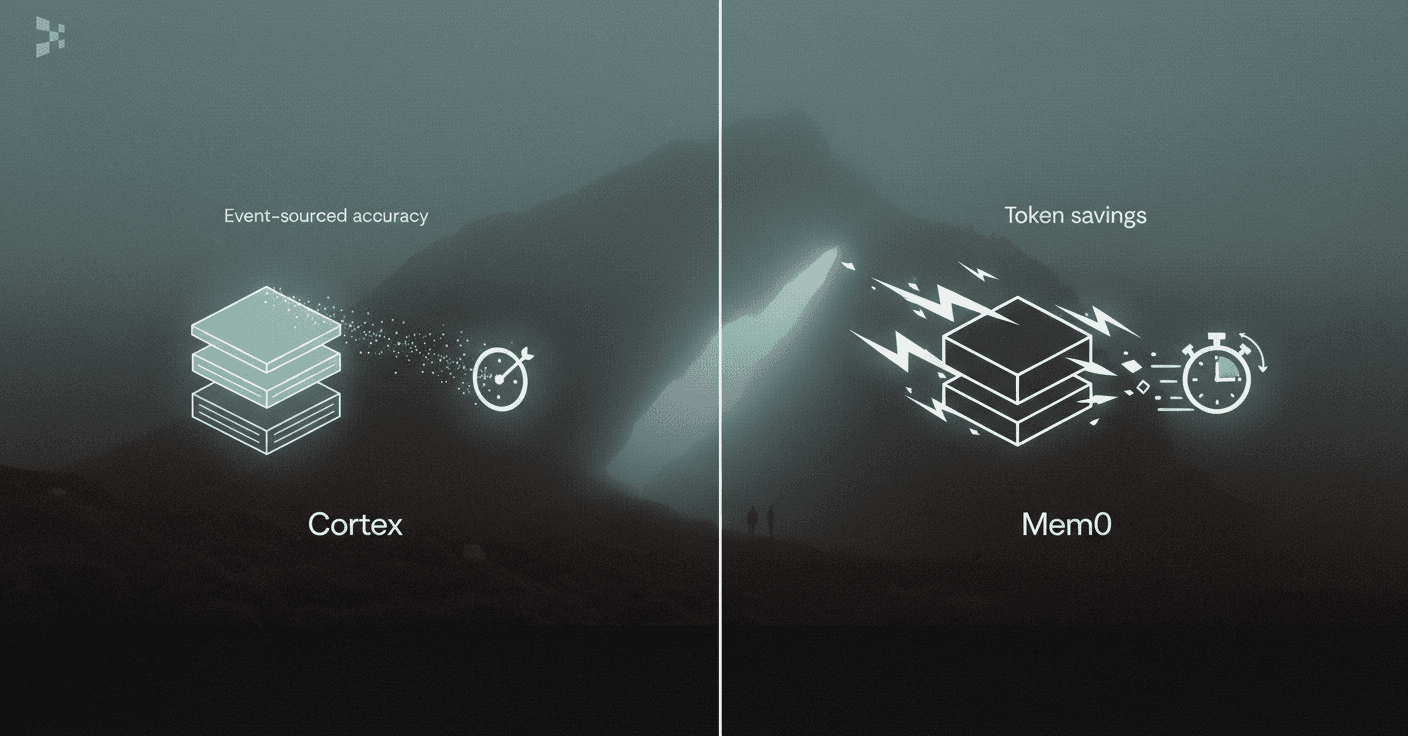
The comparison comes down to architectural priorities:
Dimension | Cortex | Mem0 |
|---|---|---|
LongMemEval-s accuracy | Not published | |
LoCoMo accuracy | - | 66.9% |
P95 latency reduction | - | |
Token savings | Hybrid retrieval filtering | |
Temporal reasoning | - | |
Graph memory | Optional integration |
Mem0's two-phase pipeline delivers steep efficiency savings through aggressive compression. Cortex reduces spend through smarter hybrid retrieval and metadata-first filtering rather than extreme compression.
For retrieval architecture, Cortex combines semantic vector search, full-text search, metadata-first filtering, and weighted reranking. Mem0 offers vector-based semantic search with optional graph memory via Neo4j or Memgraph.
The standard LongMemEval_S configuration with approximately 115,000 tokens per instance tests exactly the scenarios where these architectural differences matter most.
How Much Does Each Platform Cost at Scale?
Mem0's token efficiency translates directly to cost savings. With 90% lower token usage than full-context methods, high-volume chat applications see significant reductions in inference spend.
According to its public comparison page, Mem0 pricing includes a free tier for 10K memories and a paid tier starting at $249 per month for graph memory.
Cortex pricing:
Starter: $400/month (up to 10M tokens ingested, up to 5 tenants)
Scale: $5,000/month (unlimited memories, unlimited tenants, Slack support)
The choice depends on your workload. When chat volume dominates costs, Mem0's compression often comes out cheaper. When error budgets hinge on recall accuracy, Cortex's precision can offset higher infrastructure bills.
Anthropic's prompt caching illustrates the broader industry trend: "The question here is how long Claude holds your prompt in cached memory: You can pay for a 5-minute window, or pay more for an hour-long window."
How Do You Implement Each Memory Layer?
Cortex deployment:
Cortex offers one-click self-hosting via a single-line Docker command. The developer-first SDK provides flexible APIs and fine-grained controls over 20+ retrieval and generation parameters.
Mem0 deployment:
Mem0 provides both managed cloud and self-hosted options. Installation is straightforward:
Python: pip install mem0ai
TypeScript: npm install mem0ai
For graph memory integration, embeddings land in your configured vector database while nodes and edges flow into a Bolt-compatible graph backend (Neo4j, Memgraph, Neptune, or Kuzu).
Both platforms emphasize production readiness. Mem0 ships with SOC 2 compliance, audit logs, and workspace governance by default. Cortex provides enterprise controls including encryption at rest and in transit, tenant isolation, and optional on-prem deployment.
Key takeaway: Cortex requires slightly more upfront configuration but offers deeper control over retrieval parameters. Mem0 prioritizes minimal setup with a small, fast API surface.
Which Memory Layer Should You Ship in 2026?
The decision matrix depends on your specific constraints:
Choose Mem0 if:
Your agents are relatively narrow, such as customer support bots or small assistants managing short-term history
Token cost is your primary constraint
You need minimal setup and a simple API key
Latency matters more than multi-session accuracy
Choose Cortex if:
Your agents need to scale across users, teams, and formats
Temporal reasoning and knowledge updates are critical
You require deterministic recall across months of interaction history
You want a self-improving retrieval layer that adapts to user behavior
For teams building production-grade AI agents where accuracy, latency, personalization, and long-term learning all matter, the architectural differences between these platforms will shape your product's ceiling.
Key Takeaways on Cortex vs Mem0
LLM memory has moved from experimental feature to production requirement. Without persistent context, agents lose the continuity that makes them useful.
Mem0 excels at efficiency: 91% lower latency, 90% fewer tokens, and a straightforward API. Its graph-based variant adds relational structure for complex use cases.
Cortex leads on accuracy: 90.23% on LongMemEval-s with particular strength in temporal reasoning (90.97%) and knowledge updates (94.87%). Its event-sourced architecture captures context automatically without model modifications or manual upkeep.
As one analysis notes: "Cortex is my answer: an event-sourced memory architecture that captures context automatically, persists it across sessions, and projects it back when you need it - no model modifications, no manual upkeep."
For teams shipping agents that need to remember, adapt, and learn over time, Cortex provides the memory layer built for production-grade AI.
Frequently Asked Questions
What is LLM memory and why is it important?
LLM memory refers to mechanisms that enable models to retain, retrieve, and update information across prompts or sessions, transforming stateless chat into a system that learns, adapts, and personalizes. This capability is crucial for maintaining context and improving user interactions in AI applications.
How does Cortex differ from Mem0 in terms of architecture?
Cortex uses an event-sourced memory architecture with a self-improving retrieval layer, focusing on accuracy and temporal reasoning. Mem0 employs a memory-centric architecture with a two-phase pipeline for efficiency, emphasizing token savings and latency reduction.
What are the key benchmarks for evaluating LLM memory systems?
LongMemEval and LoCoMo are key benchmarks. LongMemEval tests multi-session reasoning, temporal reasoning, and knowledge updates, while LoCoMo focuses on long-term, persona-grounded dialogues with multi-modal challenges.
How does Cortex perform on public benchmarks?
Cortex achieved 90.23% overall accuracy on LongMemEval-s, excelling in temporal reasoning and knowledge updates, making it a strong choice for production-critical areas.
What are the cost considerations for Cortex and Mem0?
Mem0 offers significant token savings, making it cost-effective for high-volume applications. Cortex, while potentially more expensive, provides higher accuracy and better long-term memory capabilities, which can offset costs in accuracy-critical applications.
How does Cortex's memory layer benefit AI applications?
Cortex's memory layer provides a self-improving retrieval system that adapts to user behavior, ensuring accurate, personalized, and context-aware interactions, essential for production-grade AI applications.
Sources
https://astgl.com/p/cortex-event-sourced-memory-ai-coding-assistants
https://www.usecortex.ai/blog/how-to-refresh-or-update-stored-llm-memory-2026-guide
https://www.usecortex.ai/blog/what-is-llm-memory-technical-breakdown-2026
https://techcrunch.com/2026/02/17/running-ai-models-is-turning-into-a-memory-game/
https://www.emergentmind.com/topics/locomo-and-longmemeval-_s-benchmarks